Thermal stress management in broiler chickens
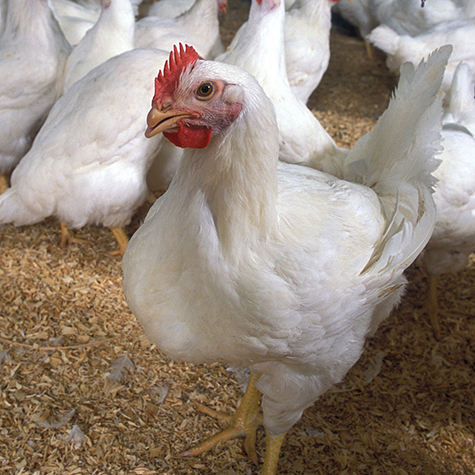
High breeding temperatures have led to an increase in mortality in broiler farms, which can lead to worse effects when combined with high relative humidity. Heat stress has affected the bird’s calmness, which leads to lower productivity. In the event of heat stress, broiler chickens are required to withstand extreme activity to regulate heat to adapt to hot conditions in order to deal with death, due to the continuous bird’s attempt to remove excess body heat. Therefore, in such a situation, most of the genetic abilities of broiler chicks are not often manifested in the production of the product.
Temperature management and ammonia control in early broiler breeding
The management of temperature and control of ammonia production is very important during the first ten to fourteen days of broiler breeding. If the chickens are damaged due to poor warming in this period, the growth rate will decrease and the feed conversion rate will increase during the breeding season. This increase in the coefficient of conversion in this period can not be compensated until the end of the course.
The Effect of Duration of Nutrition and Endurance (Growth) and Lysine Levels on Performance of Broiler Chickens
This study was carried out to determine the effect of different levels of lysine amino acid and the time of feeding on the beginning and the end of the diet on broiler chickens performance in a factorial experiment of 2 * 2 * 2 in a completely randomized design. The first factor was the duration of initial diet, the second factor, the end of the diet and the third factor, the dietary lysine level. Each of the treatments was divided into four groups of 16 pieces. For this purpose, 512 broiler chickens of Ross 308 strain were grown on a bed for 49 days and their yield was evaluated at 0-42 and 0-49 days. During the period from 0 to 42 days, the initial diet did not have a significant effect on weight gain, protein intake and protein intake, but increased feed intake, feed conversion ratio, energy consumption and energy efficiency. The end of the diet did not have a significant effect on the performance of the chicks. Increasing lysine levels resulted in increased live weight and reduced cost per kilogram of meat produced. But there was no significant effect on other parameters of experiment. Also, the reduction in the feeding period of the initial diet to 14 days did not have a significant effect on the parameters of the experiment in the period up to 49 days. However, the early onset of the final diet at 35 days led to improved protein intake and protein efficiency and the cost of consumed feed. The addition of Lysine amino acid level to 115%, the National Research Council’s recommendation, increased the weight of chicks during the period from 0 to 49 days, but did not have any significant effect on other parameters. Adding lysine to 115% recommended improves carcass weight, but does not have significant effect on other carcass compositions.
Effects of Nutrition on the Quality of Broiler Chicken
At present, research on poultry sciences has focused on improving the efficiency and composition of the body of poultry. Although progress has often been sought after genetic choices, the role of nutritional factors is also important. In addition, nutrition has a significant effect on the quality characteristics of chicken meat. This paper discusses the possible variations in the quality of broiler chickens in relation to nutritional factors.
Starch digestion at a slow pace in feeding broiler chicks
Perhaps poultry nutritionists, in rationing for broiler chickens, need to re-examine the way in which the main sources of energy supply for dietary foods are evaluated. Although poultry nutritionists are always advised to use fast-digestible nutrients in order to achieve the expected economic benefits, this topic has been accepted as a common belief for many poultry breeders. However, experiments conducted in the Netherlands have suggested that There is probably a close relationship between the low degradability of starch in the digestive system and the performance of broiler chickens.
Creating male broiler chickens more often with garlic extract
Garlic extract injected into embryos in early stages of evolution has increased the male broiler population during the Middle East experiment.
As male broiler chicks grow faster and have lower conversion rates than broiler chicks, it is not surprising that efforts should be made to increase the population of male chicks. The researchers compared the effects of garlic extract and several other herbal stimuli on the sex change of chicks. Plant stimulants in the early weeks have caused ovary gland growth in broiler chickens.
The eggs were inoculated by one of the stimulants (and distilled water as the control group) at the age of 5 days. During the chicks, the chicks were identified and cultivated until 8 weeks of age. The male to female ratio in the control group was 1/1 to 1, which was significantly lower than the other experimental groups. Garlic extract caused a ratio of 2.6 to 1, which increased by 5 to 1 when using other plant stimulants. In these groups, no changes were seen in the organs or performance of broiler chickens until 8 weeks of age.
Nutrition in broiler chicks
Chicken nutrition after leaving the eggs has a great influence on the flock yield at the end of the breeding season. In other words, if the start of flowering is consistent with proper nutrition and management, not only the same flowers are produced in terms of weight, but its function in terms of feed conversion ratio And the amount of casualties will be optimized. Therefore, to succeed in this respect, the principles of nutrition and management, especially during the first week of breeding, are of great importance. The question now is what are the proper nutrition principles in the first 48 hours of breeding?
Uniformity of broiler chicks
The objective of breeding broiler chicks is to produce smooth and well-grown flowers at the lowest possible cost. In this equation, the flock’s uniformity plays an important role in achieving the highest profit. Most of the chickens have a fault, with 20% of their herds weighing only 1.4 kilograms, while 80 Their percentage is 1.8 kilograms. Under these conditions, a herd containing 1000 birds will lose 80 kilograms of live weight.
Importance of water and moisture in broiler breeding
Birds are warm blooded vertebrates that originate in the evolutionary evolution of reptiles. One of the main ingredients in the body of water birds is water, which is the most sensitive nutrient and the largest component of the body, accounting for about 70% of the body, of which about 70% Intracellular and 30% as extracellular fluid, and this relationship should be equilibrium and excessive disturbance disrupts the entire metabolism of the body. When the chickens are hatched, the hatchery has about 70% moisture content. When chickens are loaded, the chicks are removed and placed in boxes carrying this amount of moisture, and when entering the interior with respect to the open space Hall and climatic conditions of the region are very different from the hatchery. Therefore, it should be ensured that chicks can genetically adapt themselves to the new environment because appetite is of particular importance in the first week and indicates the health of the chickens. To this end, the following is of particular importance.
1. Access to drinking water should be provided 24 hours a day.
2. For the first four days of breeding, additional drinking water should be taken into account.
3. The amount of water used should be measured manually or by meter. It can be suspected by observing sudden changes in water intake.
4. As the temperature rises, about 6.5% of the increase in water is taken for one degree higher than 21 ° C. When the air is heated its capacity increases in moisture content, so when the temperature increases, the relative humidity decreases Findings show that in the early and the first week there is a shortage of moisture because the sources of moisture removal from the poultry are exhaled and also feces. To solve this problem, it is better to use a fog or to spray water into the walls to the standard standard. In the warm seasons, the placement of chicks in the middle of the hall and the floor of the hall of the walls and on both sides The spray pattern was wet and in cold seasons, the salon kept one side of the salon and spray it, or by pouring water on the flame and steam, to compensate for this deficiency.
5. The drinkers must be full before the chick has entered the salon, and the best water temperature for the first days is at least 15 ° C and a maximum of 22 ° C. As the broiler chicks grow and age, this sensitivity will decrease.
6. Water quality includes all the factors in the water that affect the production of the herd and should be fully considered, either in terms of the density of salts or in terms of microbial contamination, so it is necessary to measure continuously the quality of water before hatching. In certain areas, water is so salty that it drastically reduces the production and quality of the herd. In these cases, it may be necessary to remove some salt from the diet. Any microbial contamination in the water indicates the entry of surface water into the water source.